
Markets
Market Growth
With the EU Green Deal — and matching commitments worldwide — carbon fibre has become a key climate-enabling technology. Demand is now compounding across two layers: steady structural growth, and a faster, climate-driven secular surge.
Structural Growth:
baseline applications — aerospace, automotive, sporting goods, industry — continue at their long-term average.
Secular Growth:
the climate markets — aviation, green hydrogen, wind and construction — are projected to grow 2–3× faster. These four are CAION’s focus.

Aviation

The future of aviation is sustainable — led by propulsion technologies like Sustainable Aviation Fuel (SAF), green hydrogen and renewable electricity. Carbon fibre composites are essential to the step-change in lightweighting that aircraft need, cutting operating costs and opening new markets, including autonomous flight. We start from your future airframe concept and work backwards — independent of any supplier — to define the carbon fibre approach that best fits your engineering and economic case.

Green Hydrogen

Green hydrogen is a crucial component of our future energy and materials economies. Produced from renewable sources, it is essential for industries such as chemicals, manufacturing and sustainable transport. Carbon fibre pressure vessels are indispensable for fuel-cell vehicles (FCEVs, e.g. heavy-duty trucks), hydrogen storage and transport infrastructure.
These vessels place stringent demands on fibre properties, design, engineering and processing — exactly where independent, end-to-end expertise de-risks the decisions that matter.

Wind
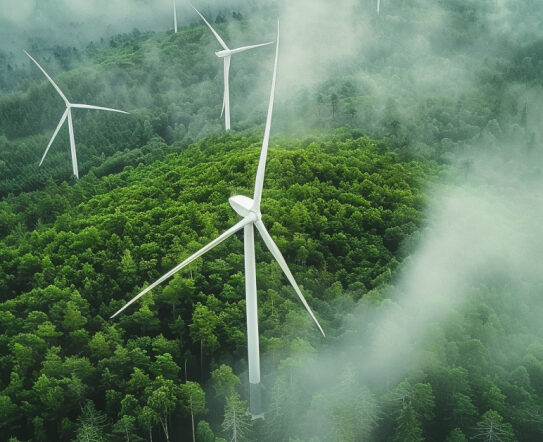
Wind power is rapidly replacing fossil fuels. The economics of wind energy are tied directly to rotor-blade size, which is now approaching lengths of 150 metres. Carbon fibre spar caps are essential to building and running these large blades efficiently. Industrialising that fibre at scale is what drives cost down — and CAION helps clients define and de-risk the path to get there.

Construction

Concrete accounts for around 8% of global CO₂ emissions, the largest single contributor to climate change. Carbon fibre composite rebar can cut those emissions by up to 70% versus traditional steel-reinforced concrete. It also builds faster, lasts longer and opens up greater design freedom — and CAION brings the business case and the independent technical guidance needed to scale the fibre and integrate it into the construction industry.